Small Business Tax Planning vs. Tax Preparation Before Year-End
Tax preparation reports what already happened: after the year closes, a preparer turns your books into an accurate return and files it on time. Small business tax planning happens before December 31, while decisions about your entity, owner pay, big purchases, and estimated payments can still change the year’s result. Most growing businesses need both, and the difference comes down to whether anyone is looking at your numbers before the year ends. For year-round planning and preparation, see our tax planning services.
What is tax preparation?
Tax preparation is the work of filing your returns. A preparer gathers your income and expense totals, applies the current rules, documents your deductions, and files the federal and state returns by the deadline. When it’s done well, you get a correct return, no notices, and a clear record if questions come up later.
The work looks backward by design. A preparer compares this year’s return to last year’s and adjusts for what changed. For a stable business whose return looks about the same every year, that’s often all it needs. A sole proprietor with steady income, no employees, and no plans to change structure may get little extra from a planning engagement, and a good preparer is the right hire.
Where preparation runs out is timing. By the time the preparer sees your numbers in February or March, the year is closed. They can report what happened, and they can’t go back and change it.
What is small business tax planning?
Tax planning looks forward. It uses your books during the year to estimate where profit will land by December 31, then looks at which decisions still have time to matter.
At Arsenault CPA, that review happens every month. Before monthly financials go out, we look at where the business stands on profit so far and where that puts it by year-end. A contractor who’s at $180,000 of profit in October has different questions than one who’s at $60,000.
Common planning questions for an owner-operated business:
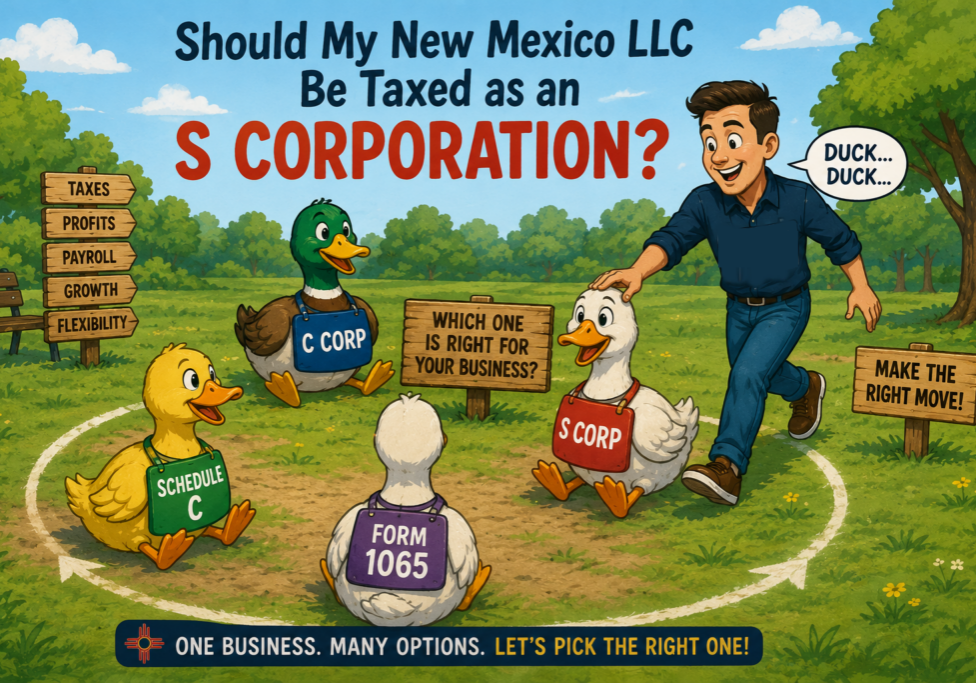
- Should the business still be a sole proprietorship, or is it time for an S corp election?
- If you’re an S corp owner, is your salary set at a reasonable level, and is payroll running so it lands before year-end?
- Does a truck or equipment purchase make more sense in December or January?
- Is your fourth-quarter estimated payment, due January 15, 2027, sized to what the year produced?
- Are business and personal returns lined up, since an S corp or pass-through LLC’s income flows onto your personal return?
Planning won’t promise a specific tax bill. What it gives you is time to make choices with your eyes open, and fewer surprises when the return is filed.
Tax planning vs. tax preparation: which does your business need?
Preparation on its own tends to fit when:
- Income is steady from year to year
- There are no employees and no plans to hire
- The entity is settled and nothing major is changing
- Your return in April rarely holds a surprise
Planning becomes worth paying for when:
- Income is growing fast or swings with the season, as it does for many contractors and artists in New Mexico
- A large purchase, a new hire, or a second truck is coming
- You’re on 1099 income with no withholding and have been caught short in April
- You own an S corp or a pass-through LLC, where the business and personal returns are tied together
Our view: tax planning matters most for owners who want to grow. If the business is staying the same size and the return looks the same every year, a good annual preparer may serve you well, and we’ll say so.
Why year-end timing matters
Most of the moves that change a tax year have to happen inside that year. Wages for an S corp owner generally count in the year they’re paid, so payroll has to run by December 31. Equipment has to be bought and placed in service. Estimated payments have their own calendar. Once January arrives, the return can only report the results.
Planning also depends on current books. If your bookkeeping is six months behind, a year-end planning meeting turns into a guessing session. The owners who get the most out of planning are the ones whose books are reconciled every month, so the projection in November starts from real numbers.
That’s why we run planning on the same books we keep current all year. The plan and the return come from the same numbers, and nobody has to rebuild your year in March.
How Arsenault CPA handles planning and preparation
We do both, on one system. Arsenault CPA is based in Gallup and works with owner-operated businesses across New Mexico. We plan before year-end, while there’s still time to act, and then we prepare the returns. For S corp and pass-through LLC owners, we handle the business and personal returns together so they line up.
Our clients get regular review meetings through the year. We bring a plain-language summary of where the business stands and what’s worth acting on, then help you make the changes.
FAQ
Is small business tax planning worth it?
It depends on the business. For a stable business with a predictable return, preparation alone may be enough. For a growing business with changing income, new hires, or an S corp, planning gives you time to make decisions before the year closes. No one can promise a specific savings amount.
When should small business tax planning start?
Before year-end, while there’s time to act. A November or December review can still change the year, but planning works best when it runs through the whole year from current books.
Where can I find tax planning near me in New Mexico?
Arsenault CPA is in Gallup and works with business owners across the state, including Albuquerque, Santa Fe, Farmington, and Rio Rancho. Everything runs online, so you don’t need to come into the office.
Does my tax preparer already do tax planning?
Ask them. Some preparers include a planning meeting before year-end. Others only see your numbers when it’s time to file. If you haven’t talked about your taxes since last April, you’ve had preparation.
Plan before the year closes
If you’d like a look at where your business is headed before December 31, Book a Consultation. We’ll talk through how your business makes money, where the books stand, and what planning would look like for you.